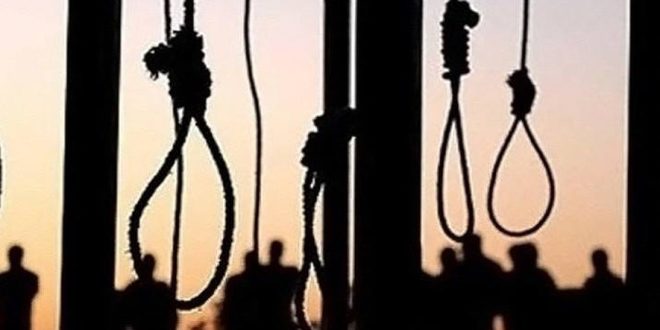
Why abolishing the death penalty does not mean abandoning accountability
Whenever I argue against the death penalty, one question returns: what should happen to someone who commits murder?
It deserves a serious answer. Behind it are bereaved families, fears about public safety, and the understandable demand that a terrible crime should have consequences.
My answer begins with a distinction: opposing execution does not mean opposing punishment. A person can condemn murder, demand accountability, and still believe that the state should not take the offender’s life.
Accountability does not depend on execution
Abolishing the death penalty removes one punishment. It does not remove criminal investigation, prosecution, imprisonment, or the obligation to protect the public.
Impunity means escaping accountability. It occurs when institutions fail to investigate, when influence shields an offender, or when the law is applied selectively. Keeping execution on the statute book does not solve those problems.
The real test is whether a justice system can establish the truth and hold people accountable through fair and effective proceedings.
Victims deserve more than a sentence
An argument against execution is incomplete if it overlooks the people harmed by crime.
A bereaved family may need psychological support, financial assistance, reliable information, protection, and answers about what happened. These needs remain whether the offender is executed or imprisoned.
Nor do victims’ families speak with one voice. Some support execution; others oppose it. Neither position should be presented as the experience of every family.
No one should be pressured to forgive. Equally, grief should not be used to close down discussion about the limits of state punishment.
A justice system should ask both what the offender deserves and what the people harmed actually need.
Protecting the public remains essential
Abolition does not mean automatically releasing people who pose a serious danger.
Depending on the legal system and the circumstances of the offence, substantial prison sentences, judicial oversight, and properly conducted risk assessments can form part of the response. Rehabilitation may also matter, but it does not erase responsibility or guarantee that every offender will change.
The difficult work is to build a system that takes public safety, proportionate punishment, and human dignity seriously together.
An irreversible punishment leaves no room for correction
Courts depend on evidence and human judgment. Witnesses can be mistaken. Confessions can be coerced. Relevant evidence can be concealed or misunderstood.
Wrongful imprisonment causes damage that compensation can never fully repair. Yet release still leaves some opportunity to correct an injustice.
Execution removes that possibility.
For me, this is one of the strongest reasons to oppose it. The state should be especially cautious when imposing a punishment that makes correction impossible.
Claims about deterrence require evidence
The claim that execution prevents murder more effectively than imprisonment is an empirical claim. It needs reliable evidence.
We should ask how studies distinguish the effect of punishment from other influences: policing, the likelihood of arrest, social conditions, and changes in patterns of violence. We should also distinguish uncertainty about an effect from proof that no effect exists.
Public safety deserves that care. A punishment’s severity should never substitute for examining whether a policy achieves its stated purpose.
The limits of state power
The state has extensive powers to investigate, prosecute, and restrict liberty. Those powers require safeguards precisely because they can do great harm.
My opposition to execution rests partly on a question about their limits: must the power to punish include the power deliberately and irreversibly to end a life?
I believe a state can respond firmly to grave wrongdoing while exercising restraint. That position does not diminish the value of the victim’s life. It asks what response best respects the value we attach to human life.
Abolition must come with responsibility
Ending executions is not a complete criminal justice policy.
It must be accompanied by credible investigations, independent courts, effective defence representation, meaningful review of convictions, humane detention, and practical support for victims.
Prevention matters too. A responsible approach asks how to reduce violence before another family experiences it.
I oppose the death penalty, and I want serious crimes to have serious consequences. I want victims to be heard, offenders to be held accountable, and the public to be protected.
Those commitments can coexist.
Justice should establish truth, recognise harm, and impose lawful consequences. It need not take another life to demonstrate its strength.
A shortened English adaptation of the Persian essay.
