What does “Architects of Atrocities” reveal about the crackdown on Woman, Life, Freedom?
Four years after the death of Zhina Mahsa Amini, fundamental questions about the crackdown on the 2022 protests remain unanswered. Who made the decisions? How did orders reach the forces deployed on the streets? And how does the responsibility of those who fired relate to that of those who directed the operations?
Amnesty International’s new report, published on 16 September 2026, places these questions at the centre of its investigation. Entitled Architects of Atrocities: State Machinery Orchestrating Crimes Against Humanity in Iran’s 2022 Woman Life Freedom Uprising, it goes beyond documenting violations to examine chains of command. Amnesty identifies 87 officials who it says should face criminal investigation. [1]
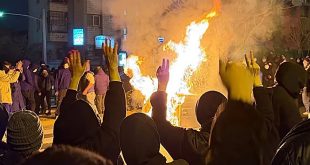
The importance of this approach lies in its perspective. Images from the streets capture moments of violence. Examining the command structure seeks to explain which decisions and powers made that violence possible.
From shootings on the streets to structures of decision-making
In its introduction to the report, Amnesty identifies the Islamic Revolutionary Guards Corps and the Police Command of the Islamic Republic of Iran, known as FARAJA, as the two main forces leading lethal repression. It also examines the role of security councils at national and local levels. In Amnesty’s assessment, the documented conduct took place within a state policy of suppressing the protests. [2]
For me, this raises the report’s central analytical question: can responsibility be examined only at the level of the officer on the street?
Answering that question requires understanding the relationship between decisions, orders, authority and actions. If an investigation stops at the final link in that chain, it may overlook those who provided resources, coordinated operations or exercised control over forces.
Moving towards higher levels of responsibility also demands greater precision. An official position alone does not establish criminal responsibility. Each person’s role must be assessed against the evidence relating to that individual.
What evidence underpins the report?
Amnesty says its research included interviews with 270 people, among them witnesses, former detainees, relatives, lawyers and medical workers. It also analysed more than 2,000 videos and documents including leaked official orders, court judgments and forensic records. [2]
The value of such a collection lies in the ability to compare sources. Testimony can help explain an image; an official document can clarify a decision; and medical information can support, or raise questions about, an account of an injury.
The volume of material should not replace scrutiny of its quality. A critical reading should ask what evidence supports each conclusion, how independent the sources are, and which limitations remain.
87 officials: a call for investigation, not a conviction
Amnesty’s accompanying explanation says its identification of the 87 officials draws on documented crimes and analysis of command structures in Kurdistan, Kermanshah and West Azerbaijan provinces. The list includes officials at national, regional and local levels. Amnesty states that it applied the “reasonable grounds to believe” standard in identifying them. [3]
This distinction must be preserved when discussing the report publicly. A call for criminal investigation means that, in Amnesty’s assessment, the available evidence justifies examining an individual’s responsibility. It is different from proving a charge in court.
Nor should the list be understood as covering every potentially responsible official or every incident across Iran. The scope of the investigation and the strength of the evidence concerning each person must be considered separately.
Victims beyond the numbers
Amnesty has also published a companion document recording information about the deaths of 377 protesters and bystanders, including their names, locations and dates of death, and photographs where available. This is the number of deaths documented in the research, and should not be treated as a final count of everyone who died. [4] [3]
Recording names has a value of its own. Political discussions can easily reduce people to numbers. Each name, however, belongs to a particular life that was cut short, and to a family living with the consequences.
Reading the report requires attention both to structures of responsibility and to the individuality of victims. A focus on commanders should not push the lives at the heart of the investigation into the background.
What difference can the report make?
Amnesty calls on the UN Security Council to refer the situation in Iran to the International Criminal Court, and on the UN General Assembly to establish an international criminal justice mechanism. These are the organisation’s demands. Publication of the report does not itself establish a court or begin a trial. [1]
The report’s value cannot, however, be measured solely by whether a judgment follows immediately. Identifying individuals, structures and questions for investigation can make demands for accountability more precise. A general call for justice becomes easier to pursue when it is connected to the roles of particular people and specific documents.
In my view, that is the most important way to approach Architects of Atrocities: read it seriously, represent its findings accurately, and distinguish documentation from a request for investigation and from a judicial verdict.
For families seeking justice, a new report does not end the wait. It may nevertheless help preserve the truth and clarify responsibility, provided that it continues to be read, scrutinised and followed up after publication.
Sources
1. Official report and English download
2. Amnesty International’s announcement
3. Amnesty’s explanation of the findings and calls for international justice
4. Companion document on victims